RTSP to WebRTC and HLS Streaming
Rust and GStreamer media pipeline with adaptive encoding
This is a high performance media streaming service that converts RTSP camera streams into WebRTC and HLS, choosing an encoding strategy that fits each viewer's available bandwidth. The backend is written in Rust with GStreamer for efficient low latency streaming and supports both H.264 and H.265 video.
It offers three encoding modes. A pass through mode sends the original stream untouched, a single re encode normalizes it once and an adaptive mode adjusts the encode based on the client network. HLS is served at 480p, 720p and 1080p so playback stays smooth on any connection.
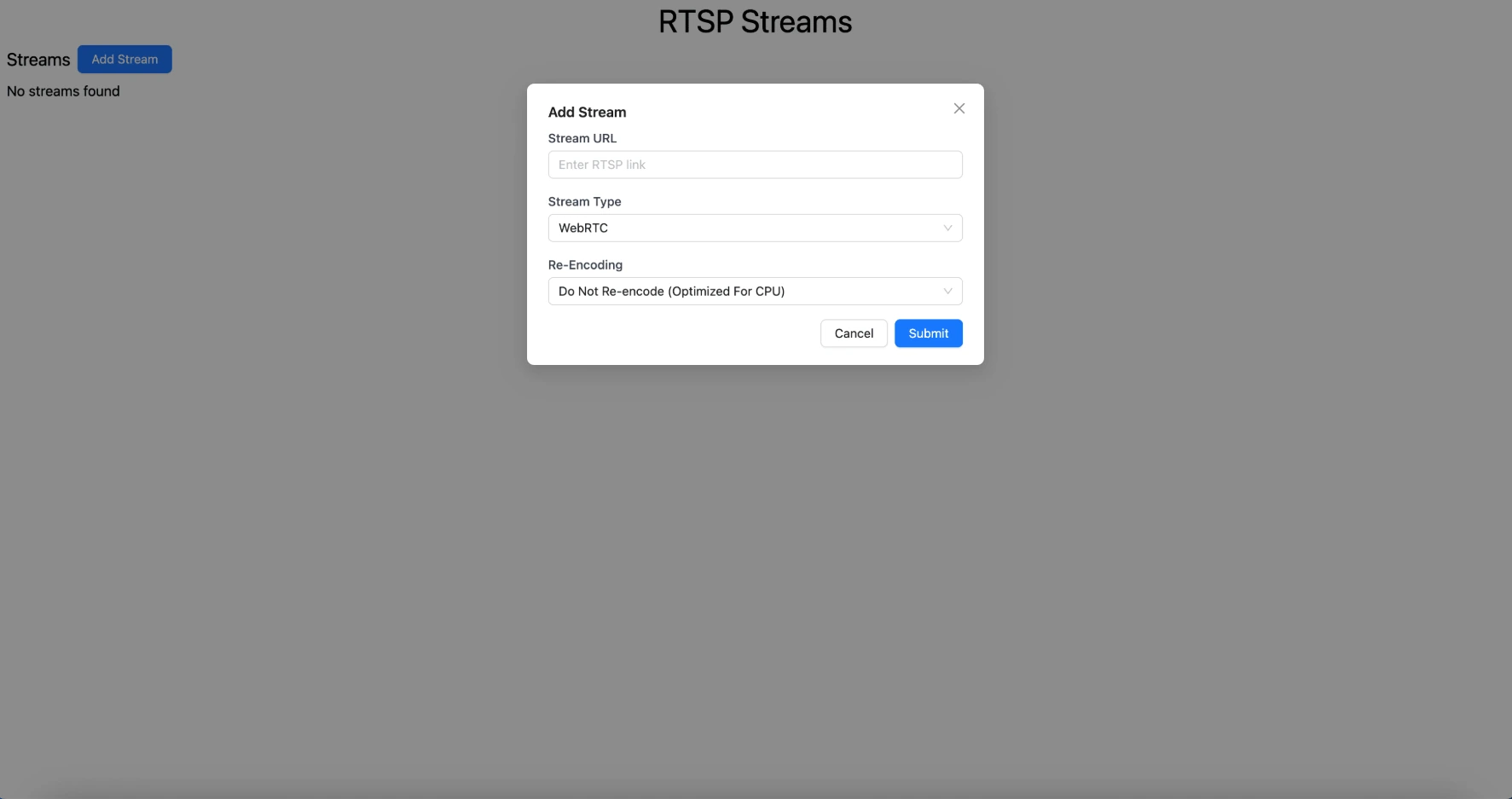
The frontend is built with Next.js and provides a responsive dashboard where users pick the stream type and quality and control playback. The Rust core keeps latency very low even under sustained load.
Key Features
Tech Stack
Rust
Low latency media backend
GStreamer
Transcoding and packaging
WebRTC
Real time stream delivery
HLS
Adaptive playback
Next.js
Dashboard and controls
Ant Design
UI components
Role
Full Stack Developer
Year
2025